




From 13 October 2026, you can invest in the S&P 500, the Nasdaq-100 and the MSCI World on SGX, in Singapore dollars, through your POEMS account.
DWS is cross-listing four of its existing Ireland-domiciled Xtrackers UCITS ETFs on the Singapore Exchange (SGX). Each fund holds the actual stocks in its underlying index, reinvests dividends automatically and trades during Singapore market hours. All four ETFs will be available on the POEMS trading platform from listing day.
The Four ETFs at a Glance
All four ETFs are Irish-domiciled, UCITS-compliant, physically replicated and accumulating. They are traded and settled in Singapore dollars (SGD) on SGX.
| SGX Ticker | ETF | Index Tracked | TER (p.a.) | Role in a Portfolio |
|---|---|---|---|---|
| XWR | Xtrackers MSCI World UCITS ETF | MSCI World | 0.12% | Global core: large and mid-cap companies across 23 developed markets. |
| XUS | Xtrackers S&P 500 UCITS ETF | S&P 500 | 0.03% | US core: low-cost exposure to 500 leading US companies. |
| EUS | Xtrackers S&P 500 Equal Weight UCITS ETF | S&P 500 Equal Weight | 0.15% | Diversification tilt: each company is reset to approximately 0.2% at every quarterly rebalance, reducing reliance on the largest companies. |
| XND | Xtrackers Nasdaq 100 UCITS ETF | Nasdaq-100 | 0.20% | Growth satellite: exposure to the 100 largest non-financial companies listed on Nasdaq, with a significant technology tilt. |
What Do These ETF Features Mean?
- Irish-domiciled: The fund is legally based in Ireland. This structure can benefit from the US–Ireland tax treaty, which generally reduces US dividend withholding tax on eligible US stock dividends to 15% at fund level.
- UCITS-compliant: The fund follows a European regulatory framework that establishes requirements for matters such as diversification, asset safekeeping and investor disclosure.
- Physically replicated: The fund buys the actual stocks in its underlying index rather than relying on derivatives to replicate the index’s returns.
- Accumulating: The fund reinvests dividends instead of distributing them to investors as cash. This allows income to remain invested within the fund.
- Trades and settles in SGD on SGX: Investors can buy and sell the ETFs in Singapore dollars, much like other SGX-listed securities. However, trading in SGD does not eliminate currency risk from the underlying overseas investments.
Why These Listings Matter
1. A Potentially More Tax-Efficient Structure for US Exposure
US-domiciled ETFs such as SPY and QQQ generally face 30% US withholding tax on dividends paid to non-US investors, subject to applicable tax rules. By comparison, eligible US stock dividends received by Irish-domiciled funds generally benefit from the US–Ireland tax treaty’s 15% withholding tax rate at fund level.
This difference can affect the amount of dividend income retained within a fund over time. However, the final impact on investment returns depends on the fund’s holdings, applicable taxes, expenses and market performance.
Irish-domiciled ETFs may also offer an estate-tax advantage for non-US investors. Shares in an Irish-domiciled fund are generally not US-situs assets in the same way as shares in a US-domiciled ETF. In contrast, certain US-situs assets held by non-US individuals may be subject to US estate tax, with a filing threshold that can be as low as US$60,000 and potential tax rates of up to 40%. Estate-tax treatment depends on individual circumstances and applicable law.
2. Dividends Reinvested Automatically
All four Xtrackers ETFs use accumulating share classes. Instead of distributing dividends to investors as cash, each fund reinvests the dividends it receives, after applicable withholding taxes and fund-level expenses.
For long-term investors, automatic reinvestment can help keep more capital invested and support compounding over time. However, accumulating ETFs do not guarantee higher returns, and their value can still fall when the underlying markets decline.
Singapore generally does not tax capital gains arising from personal investments, although the treatment depends on the investor’s circumstances and the nature of the activity. Malaysian investors should also consider any tax obligations applicable to their own situation.
3. Global Benchmarks, Traded the Local Way
Investors can trade these ETFs on SGX in SGD during Singapore market hours, generally from 9:00 AM to 5:00 PM Singapore Time, subject to the exchange’s trading schedule and applicable market sessions.
Through a POEMS account, investors can access these ETFs alongside other available investments, including Singapore-listed stocks and REITs, subject to account eligibility and product availability.
Trading in SGD can simplify the order-placement process because investors do not need to convert their trading funds into USD to place an SGD-denominated order. Nevertheless, the underlying funds hold overseas shares, so movements in the SGD against the currencies of those investments can affect returns. Currency exposure remains even when the ETF is traded in SGD.
How Investors Might Use These ETFs Together
The four funds can serve different purposes within a core-and-satellite investment approach. The examples below explain their characteristics and are not recommendations to buy any particular ETF.
1. One-Fund Global Core: XWR
The Xtrackers MSCI World UCITS ETF (XWR) provides exposure to large and mid-cap companies across 23 developed markets. It offers a broad starting point for investors seeking international diversification through a single fund.
However, the MSCI World Index has a substantial allocation to US companies. Combining XWR with XUS would increase exposure to the US market rather than necessarily improving geographical diversification.
2. US-Focused Core: XUS
The Xtrackers S&P 500 UCITS ETF (XUS) tracks the S&P 500 Index, which represents approximately 500 leading US companies. With a total expense ratio (TER) of 0.03% per annum, it offers a low-cost way to gain broad exposure to the US large-cap equity market.
Its market-capitalisation-weighted structure means larger companies account for a greater proportion of the index. As a result, the performance of the biggest constituents can have a significant influence on overall returns.
3. Less Concentration in the Largest Companies: EUS
The Xtrackers S&P 500 Equal Weight UCITS ETF (EUS) holds the same 500 companies as the conventional S&P 500 Index but assigns them approximately equal weights at each quarterly rebalance.
This approach reduces the influence of the largest companies and increases the relative weight of smaller constituents within the index. EUS may therefore perform differently from XUS, particularly when market returns are driven by a small group of mega-cap stocks. Its equal-weight structure may also lead to different sector exposures and turnover.
4. Growth Satellite: XND
The Xtrackers Nasdaq 100 UCITS ETF (XND) tracks the Nasdaq-100 Index, which comprises 100 of the largest non-financial companies listed on Nasdaq.
The index has significant exposure to technology and other growth-oriented businesses. XND may complement a broader portfolio for investors seeking additional growth exposure, but its concentration can also result in greater volatility and larger drawdowns when growth stocks come under pressure.
Things to Consider Before Investing
- Investment objectives: Choose an ETF based on your time horizon, financial goals and risk tolerance.
- Portfolio overlap: XWR, XUS, EUS and XND may share some underlying holdings. Holding several funds does not automatically mean you are better diversified.
- Currency risk: Although the ETFs trade in SGD, their underlying investments are exposed to foreign currencies.
- Costs: Consider the TER alongside brokerage fees, exchange charges, bid-ask spreads and any other applicable trading costs.
- Market risk: Equity ETFs can lose value, and investors may receive less than their original investment.
- Tax considerations: Withholding tax, estate tax and other tax treatment depend on the fund structure, investor residency and individual circumstances.
Access the New Xtrackers ETFs on POEMS
With four Xtrackers UCITS ETFs listed on SGX, investors can access developed-market equities, US large-cap stocks, an equal-weight US strategy and Nasdaq-listed growth companies through SGD-denominated securities.
Investors can explore these ETFs on the POEMS trading platform from 13 October 2026, subject to product availability and the relevant account requirements.
Phillip Capital’s POEMS Platform offers a comprehensive suite of tools to support your trading journey:
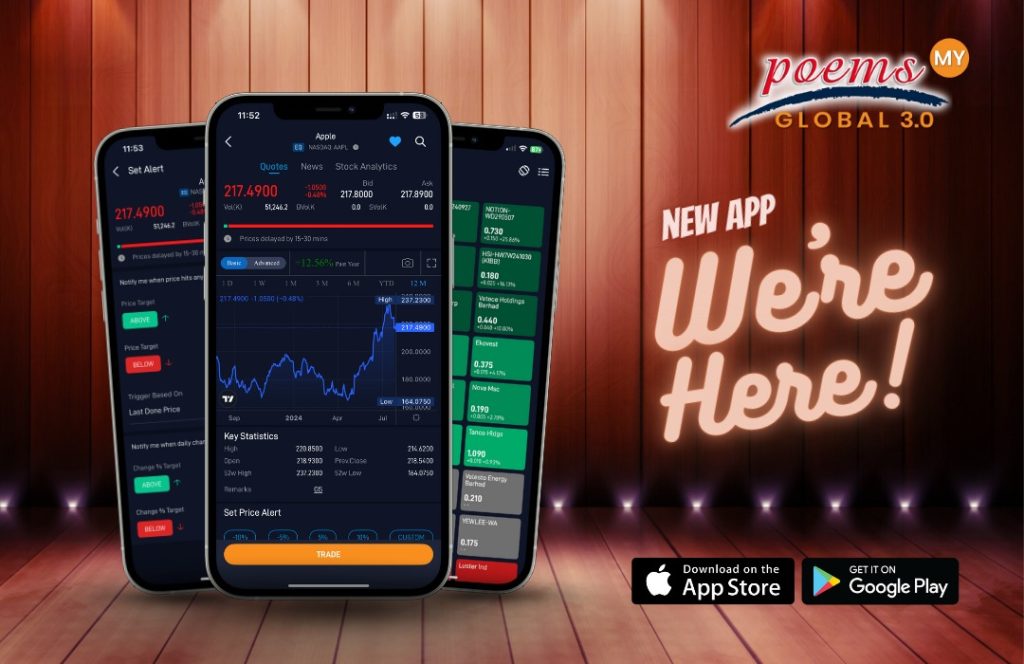
- Personalised Interface: Tailor your trading environment to suit your preferences.
- Integrated Trading Tools: Access real-time analytics and live charts for informed decision-making.
- Multi-lingual Support: Benefit from assistance in various languages, catering to international investors.
Explore Phillip Capital’s platforms and tools and implement these insights effectively.