



Commodities markets in 2026 have been anything but predictable. Gold is clinging to critical support levels near $4,500, crude oil is rebounding from post-conflict lows, and those active in commodities trading in Malaysia are navigating a landscape shaped by geopolitical uncertainty, inflation concerns and shifting central bank policy.
For anyone watching these markets closely, the question is not whether volatility will continue. It is how to position for what comes next.
This article examines the current state of gold and crude oil markets, the forces driving price action in 2026, and what Malaysian traders need to understand about commodities trading in this environment.
Key Takeaways
- Gold remains range-bound between $4,500 and $5,000, supported by central bank buying but pressured by rising bond yields and Fed rate expectations
- Crude oil has rebounded from March lows following the US-Iran peace accord, but structural supply recovery will take months, keeping prices elevated above pre-conflict levels
- Commodities trading in Malaysia offers access to global markets including gold futures, crude oil and indices through platforms like NOVA
- 2026 trends show headline-driven volatility, inflation persistence and increased institutional interest in hard assets as portfolio hedges
Gold at $4,500: Support or Breaking Point?
A Range Under Pressure
Gold has spent much of 2026 consolidating between $4,500 and $5,000 per ounce on COMEX. The $4,500 floor keeps holding, though it is being tested more often.
Mixed Fundamentals
- Central banks keep accumulating bullion for reserve diversification, cushioning deeper declines
- Rising US Treasury yields and a hawkish Fed stance have dented gold’s appeal against interest-bearing assets
Weakening Technical Signals
The 50-day moving average has crossed below the 100-day, a bearish signal. A decisive break below $4,500 could draw selling toward the 200-day average next.
Geopolitical Desensitisation
Middle East tensions still spark safe-haven flows, but markets have grown desensitised to headlines, with rallies unwinding quickly once ceasefire talk emerges.
Getting Exposure
Gold futures remain accessible to Malaysian traders through platforms offering COMEX exposure, letting them take directional views or hedge currency risk in ringgit portfolios. This gold trading guide breaks down how to get started.
Crude Oil: The Post-Conflict Rebound

A Sharp Reversal
Crude oil has followed a very different path to gold. Brent fell below $80 per barrel in June 2026 following the US-Iran peace accord, its lowest since early March, while WTI dropped over 5% in the days after.
The Catalyst
The reopening of the Strait of Hormuz removed a supply shock that had pushed oil above $120 per barrel at the height of the conflict. Roughly 20 million barrels a day transit the Strait normally, around 20% of global supply.
A Gradual Recovery
The peace deal differs structurally from earlier ceasefires, but physical supply recovery will take time: initial tanker flows from mid-July 2026, 85% volume restoration by October, and full normalisation extending into January 2027.
Still Elevated
Prices remain over 20% above pre-conflict levels, reflecting lasting damage to Gulf refineries, pipelines and terminals. Wood Mackenzie puts Iraq’s recovery window at up to nine months.
Trading the Recovery
Crude oil futures, via NYMEX WTI or ICE Brent, offer Malaysian traders exposure to this recovery story as supply dynamics keep evolving through the second half of 2026.
What 2026 Trends Mean for Traders
The commodities landscape in 2026 is shaped by several persistent themes that traders in Malaysia should understand.
Headline-Driven Volatility
Markets are reacting less to fundamentals and more to shifting political headlines, with fear one moment giving way to unwound positions on diplomacy hopes the next. This makes risk management and position sizing more critical than ever. Understanding how oil tensions are reshaping markets is essential for 2026.
Inflation Persistence
Elevated oil prices linked to Middle East tensions are adding to global inflationary pressures, fuelling speculation that the Fed could hold rates higher for longer. This creates a tug-of-war between inflation hedging demand and the cost of holding non-yielding assets.
Central Bank Demand
Central banks keep diversifying reserves away from the US Dollar through gold accumulation, cushioning declines despite volatility and offering a longer-term tailwind. For those considering gold in a diversified portfolio, this structural demand is a key consideration.
Supply Chain Realities
Supply shocks do not unwind as fast as headlines suggest. Tanker availability, insurance premiums and infrastructure repairs all take time, creating opportunities for traders who grasp the gap between headlines and the slower reality of recovery. Knowing the factors affecting crude oil prices is essential for informed decisions here.
Commodities Trading Malaysia: Access and Execution
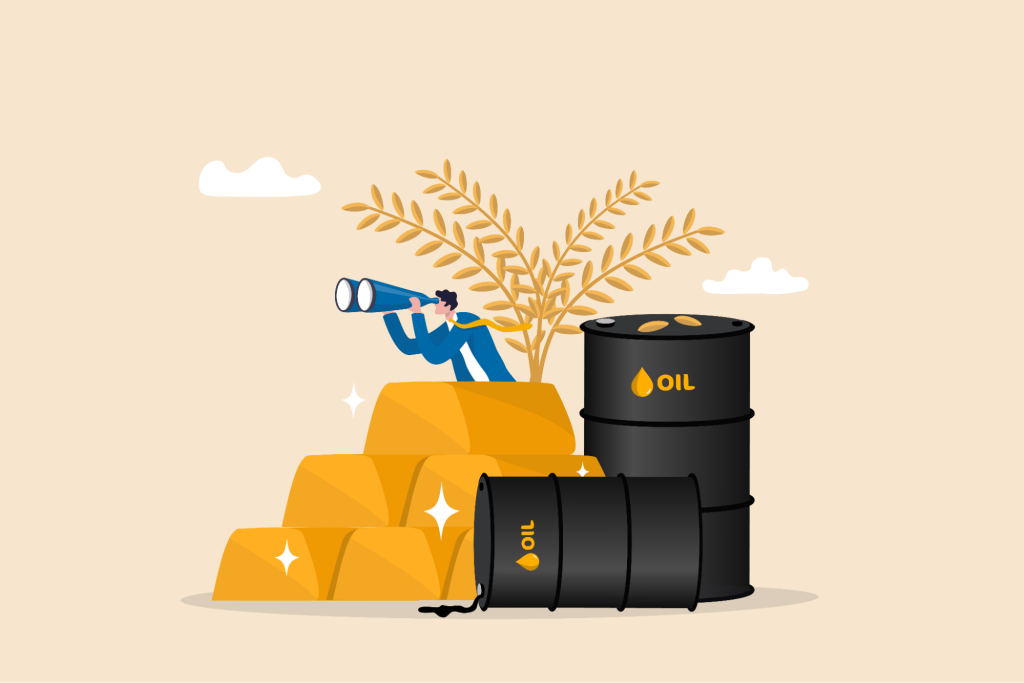
Malaysian traders have access to global commodities markets through regulated platforms that offer futures, CFDs and related instruments. Phillip Capital’s NOVA platform, integrated with TradingView, provides access to gold futures, crude oil futures and a range of global indices, with professional-grade charting tools and real-time execution.
The ability to trade commodities from Malaysia means exposure to price movements driven by global supply and demand dynamics, central bank policy and geopolitical developments. For traders with a view on gold’s next move or crude oil’s recovery trajectory, these instruments offer a direct way to express that conviction.
Risk management remains essential. Commodities markets can move sharply on headlines, and leverage amplifies both gains and losses. Position sizing, stop-loss discipline and an understanding of contract specifications are foundational to navigating these markets effectively.
The Road Ahead for Gold and Crude Oil
Gold: Watching the Corridor
Gold is likely to stay range-bound near term, with $4,500 to $5,000 marking the boundaries. A hawkish Fed points to downside, while escalating geopolitical risk or stickier inflation favours the upper end.
Crude Oil: A Clearer Timeline
Oil’s path is defined by the physical recovery schedule. As Gulf supply returns, prices should ease from conflict highs, though the elevated base above pre-war levels suggests tightness persists into 2027. The question is not whether oil falls further, but how quickly supply is restored and demand holds up.
The Broader Message
Both markets point to the same lesson: telling headlines apart from fundamentals matters more than usual in 2026. Narratives will keep driving prices short term, but supply and demand will ultimately decide where commodities settle.
Trade Commodities with Confidence
Whether you are looking to gain exposure to gold, crude oil or broader commodity markets, having the right platform and tools makes all the difference. Phillip Capital’s NOVA platform, integrated with TradingView, offers professional-grade charting, real-time execution and access to global futures markets.
From gold futures to crude oil, Malaysian traders can position for the next phase of the commodities story with a platform built for speed, flexibility and informed decision-making.
Ready to trade smarter? Visit Phillip Capital Malaysia to explore the tools and platforms available for trading commodities in 2026.