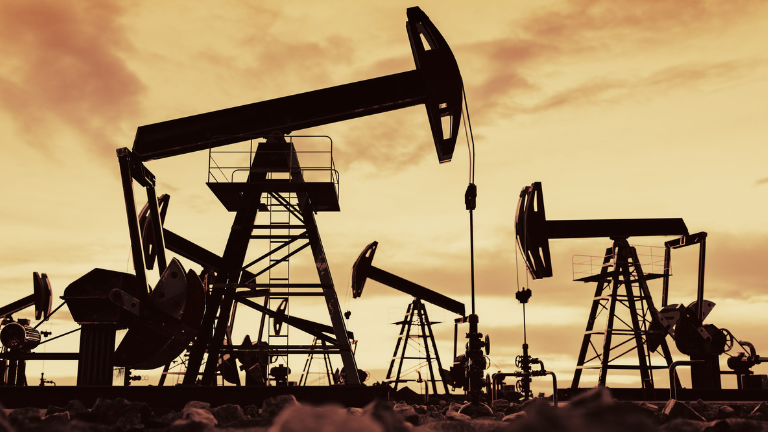



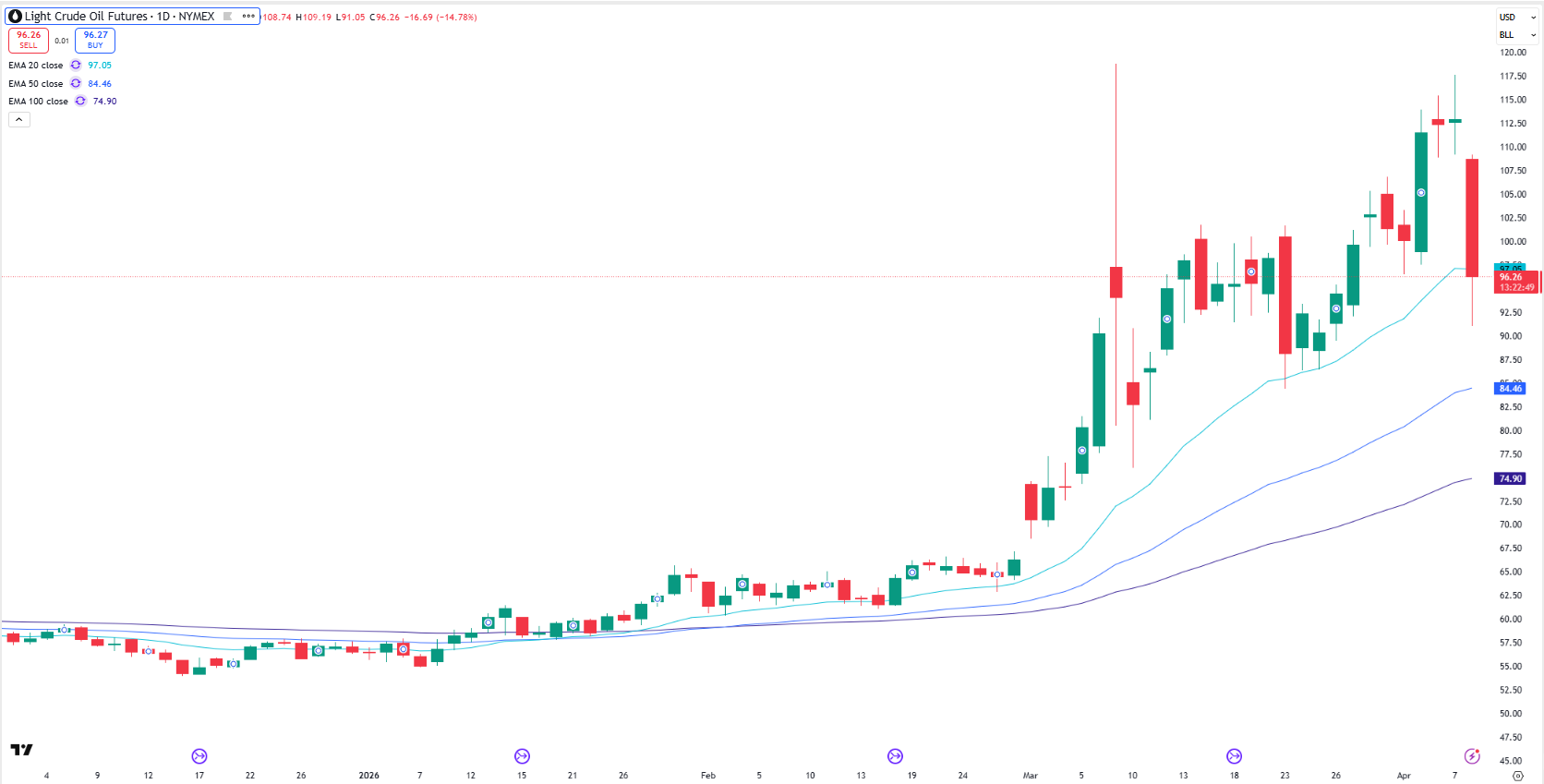
In a dramatic shift, what began as escalating threats of severe military action against Iran has quickly transitioned into a two-week ceasefire. The announcement triggered a sharp reaction in oil markets, with prices falling more than $20 per barrel from recent highs—marking a decline of over 15%.
The easing of tensions has led investors to anticipate a potential reopening of the Strait of Hormuz, a critical passage that accounts for over 20% of global oil flows. As of this morning, WTI crude trades near $96.67 per barrel, while Brent has slipped to $94.56, reflecting a rapid unwinding of geopolitical risk premiums.
However, while markets have reacted positively to the ceasefire, underlying risks remain. The US has signalled that the military phase of the conflict may be winding down, but Iran has framed the outcome as a strategic victory – suggesting deeper geopolitical tensions may persist beneath the surface.
The key question now is not just whether Hormuz reopens, but how smoothly global oil flows can normalise. Concerns remain over potential damage to critical infrastructure, including export hubs like Kharg Island, as well as the lasting impact of rerouted shipping lanes, elevated insurance premiums, and cautious tanker activity.
Even with a ceasefire in place, these disruptions could continue to embed higher costs into the energy market. Early signs suggest normalisation may take weeks rather than days, as shipping operators and insurers remain cautious.
More broadly, the conflict may leave a lasting legacy beyond the battlefield. Elevated fuel costs, pressure on transportation and logistics sectors, and renewed inflation risks could persist well after tensions ease.
Key takeaway:
While the ceasefire has eased immediate fears, the structural impact on global energy markets is far from over. The war may be pausing, but the aftershocks in oil, inflation, and supply chains could only just be beginning.
While the ceasefire has eased immediate fears, the structural impact on global energy markets is far from over. The war may be pausing, but the aftershocks in oil, inflation, and supply chains could only just be beginning.
Experience Modern Trading Today

Nova on TradingView delivers a modern trading experience that combines speed, flexibility, and powerful analytics.
With low commissions, professional-grade tools, and multi-market access, it’s a smarter, more efficient way to trade. And with the trusted name of Phillip Capital behind it, you can trade with confidence.
Ready to trade smarter and faster? 👉 Open an account today and link it to TradingView to unlock the future of trading — all on one screen.
Explore Phillip Capital’s platforms and tools and implement these insights effectively.